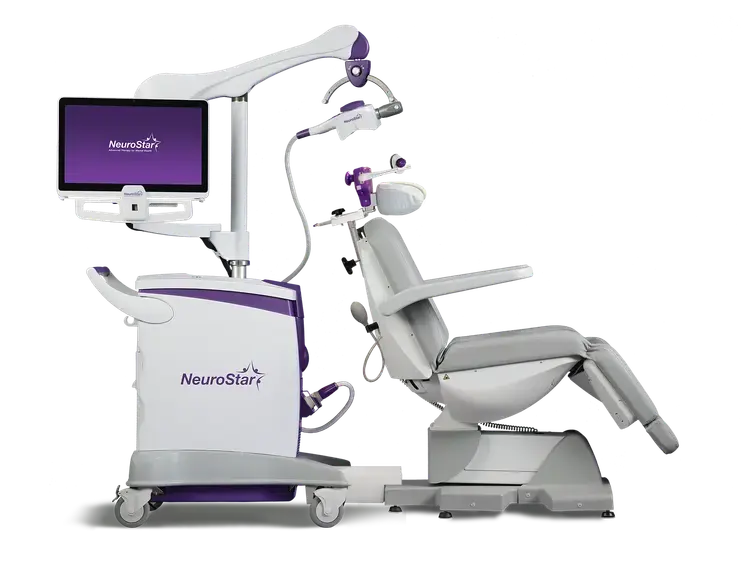
NeuroStar TMS: Relief when meds don’t work
Here’s the good news we love to share: 83% of patients who complete treatment with NeuroStar TMS report a reduction of their depression symptoms. A whopping 62% report a REMISSION of their symptoms, which mean they no longer meet the diagnostic criteria for depression! With outcomes like these, we can’t stay quiet.Does it hurt? Does it work? Will my insurance pay for it?
The Dream Team
Besides getting excellent care from highly trained professionals, we’ll actively help you confirm your insurance benefits, obtain prior authorization if necessary, and help you navigate all the details to give you the best chance for maximum success. That’s the Grovewood Difference.
Get the full picture of TMS at Grovewood Mental Health
We break down what transcranial magnetic stimulation involves, from the initial consultation, benefits investigation, securing prior authorization, through the full treatment course.
Precision targeting
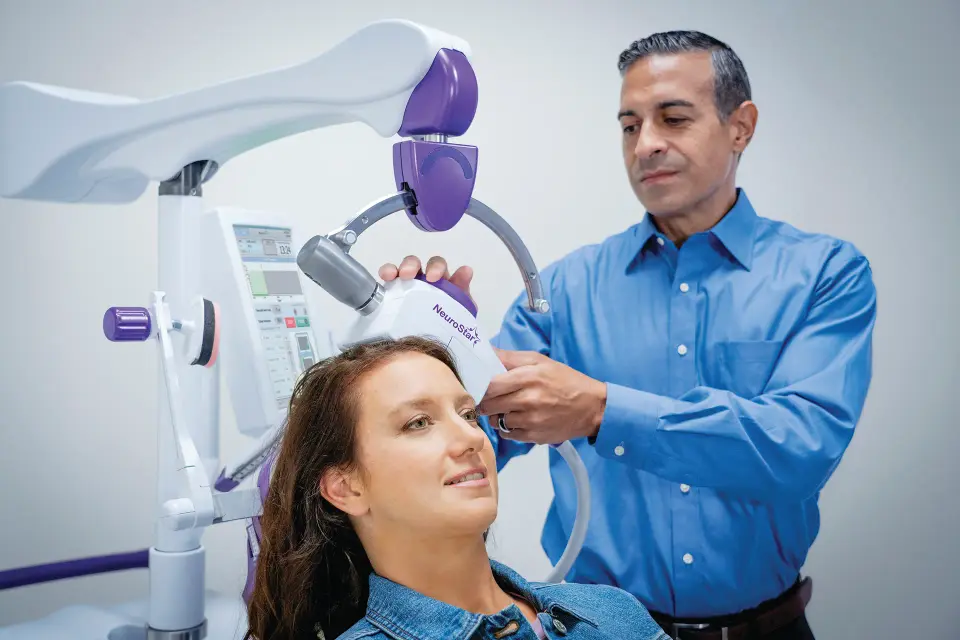
Our coil placement targets the left prefrontal cortex using evidence-based protocols, not guesswork.
Session structure
Each session lasts about 20 minutes. You sit in a chair, awake and alert, with no sedation needed.
Full treatment course
A standard course runs five days a week for four to six weeks, with tapering sessions as response stabilizes.

No recovery time
You drive yourself to and from appointments. There is no downtime, no needles, and no systemic side effects.

Ongoing monitoring
We track your PHQ-9 scores weekly and adjust parameters based on your response data.
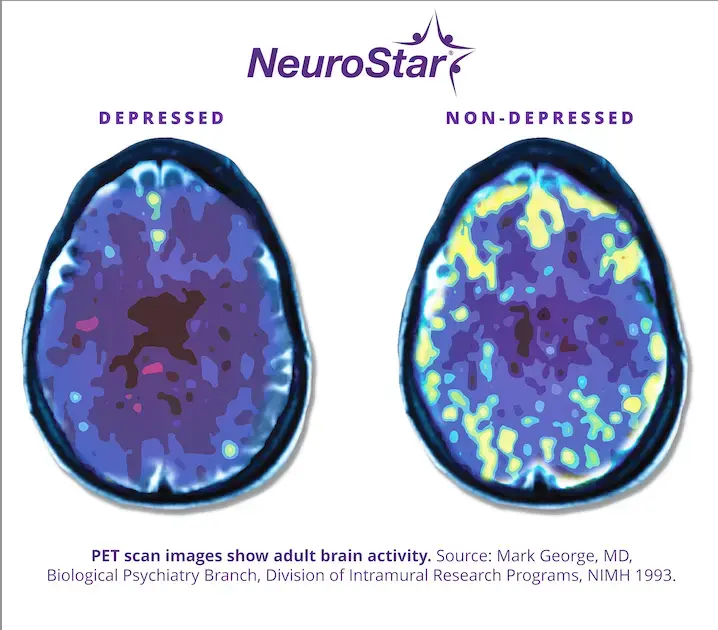
Treating Depression Where It Starts
There are specific areas in your brain that control mood. When synapses in those mood-regulating areas are underactive, connections are broken and depression can result. NeuroStar revitalizes those dormant synapses, "waking up" the brain to function as it was meant to.
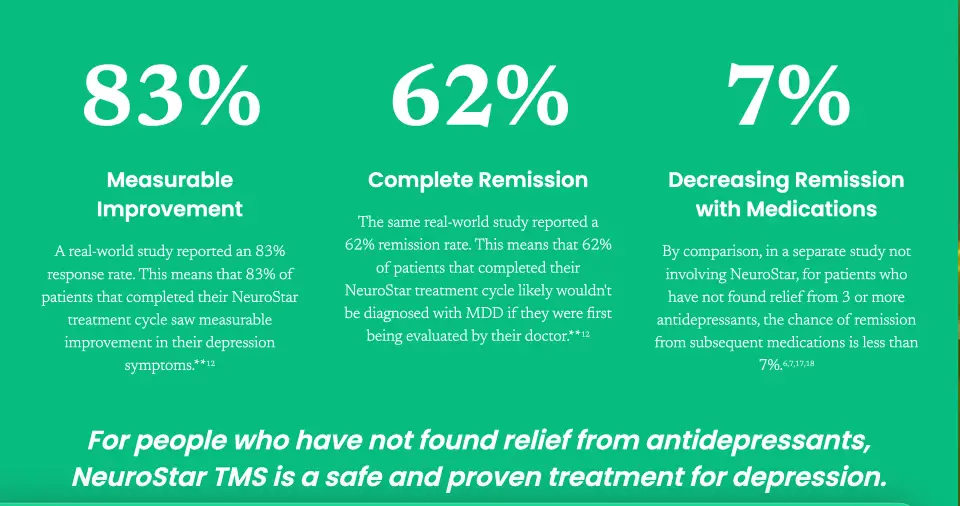
TMS by the numbers
NeuroStar TMS at a glance
A snapshot of what a typical course of NeuroStar TMS looks like at Grovewood Mental Health in Pleasant Grove.
The top 5 questions about TMS
If you have more questions, reach out for a direct answer.
Many major insurers cover TMS for treatment-resistant depression. Our team can verify your benefits before you start and walk you through any out-of-pocket costs.
You will feel a slight tapping sensation on your scalp during the session. Most patients find it tolerable, and any discomfort typically fades within the first few treatments. Our team has designed the process with the utmost care and comfort.
A single session lasts about 20 minutes, and a standard course is 36 sessions long - typically once daily, five days a week. You can drive yourself home afterward. Your clinician will create a schedule that fits your needs.
A standard course is 36 sessions, typically once daily, five days a week. Your clinician will create a schedule that fits your needs and monitor progress throughout.
TMS has little to no side-effects - you can drive yourself home after each session. For those who use medications, TMS is often used alongside medication. It does not interact with most drugs, but we review your full history during the initial assessment to make sure it is a safe fit.